


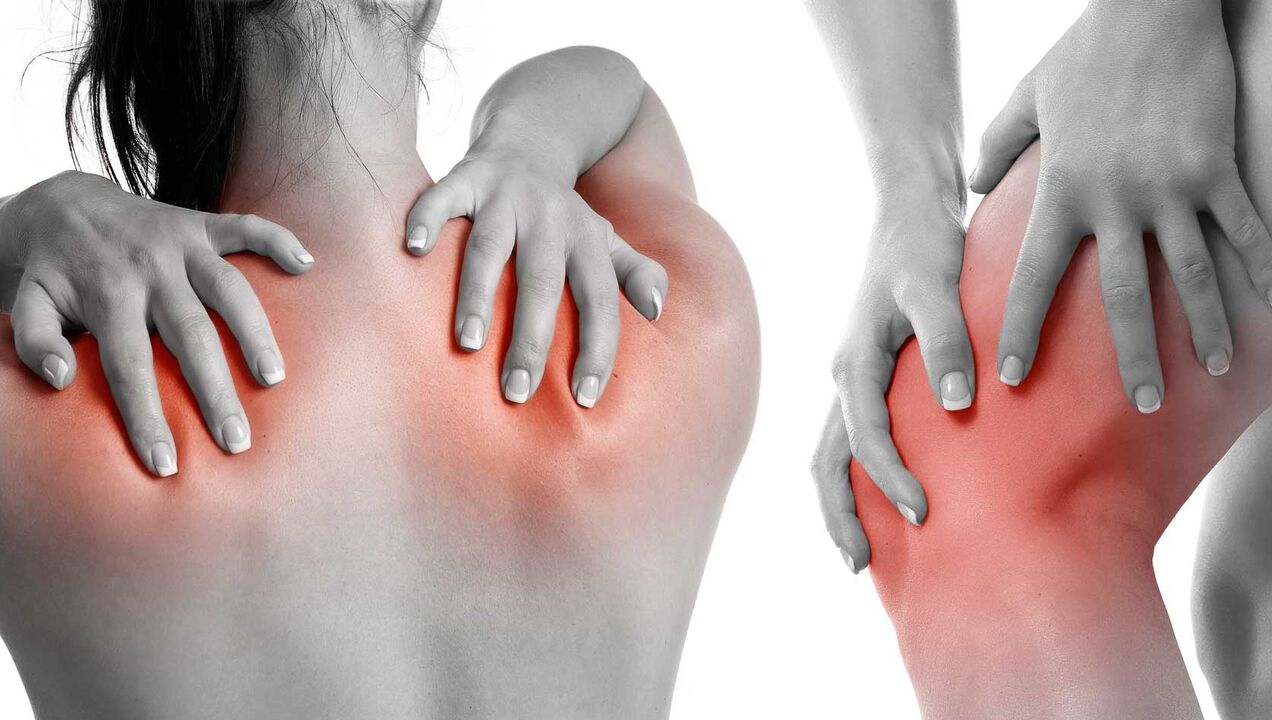
Arthritis and osteoarthritis are complex diseases that affect the joints.Due to similar symptoms, many people think that these diseases are identical, but this is not the case.Gout and osteoarthritis differ in the causes of the disease, the nature of its development, the area of damage and require a completely different treatment.
Suppose two people went to the doctor complaining of joint pain.One was diagnosed with gout and the other with gout.While both patients sat in line, they had time to briefly discuss their health issues.
It turned out that their symptoms are very similar: their joints hurt, they don't bend/unbend with full strength, they don't give rest either at night or during the day.Even the diagnoses are similar, but they are still different.What is the difference between arthritis and osteoarthritis if both diseases affect the joints?
What is arthritis
Gout is an inflammatory disease of the joint.It is always preceded by damage to bone or cartilage tissue from one factor or another.
Biologically active substances are released from damaged cells, which trigger an inflammatory reaction.The vessels in the affected area expand and fill with blood: because of this, immune cells appear in the joint tissue to fight the harmful factor.
At the same time, the liquid part of the blood leaves the vascular bed, and edema is formed, which limits the area of inflammation.This is how the body protects itself against extensive damage from bacteria, foreign bodies and chemicals.
After complete or partial removal of the pathogenic agent, the healing mechanism is started.If the damage was minor, normal tissue function is restored.Deep defects heal through a scar, an area of rough connective tissue that does not perform the normal function of an organ.
Gout goes through all of these stages:
- change – damage;
- exudation - formation of edema;
- spread - cure.
Reasons
There are many causes of the disease, we list the most important:
- streptococcal infection (tonsillitis, scarlet fever) often causes a complication - gout;
- aggressive autoantibodies - proteins that the body produces to fight its own tissue;this situation develops when there is an error in the immune system, due to which it perceives the joints as a foreign element for the body - rheumatoid arthritis;
- a violation of purine metabolism leads to the deposition of uric acid crystals in the joints - gout;
- allergic reactions may involve joint tissue with the development of an inflammatory reaction - allergic arthritis;
- long-term use of certain drugs causes inflammation (isoniazid, D-penicillins, hydralazine, proboinami) - drug-induced arthritis;
- bacteria are introduced through the bloodstream or during surgery - infectious arthritis;
- a viral or bacterial infection of any site can indirectly affect joint tissue - this is reactive arthritis;
- acute injury - recent injury (shock, bruise, capsule rupture).
Symptoms
The disease is characterized by an acute initial phase, that is, against the background of complete health, a person develops sharp pain in the joint.Autoimmune forms are characterized by symmetrical damage to small joints - interphalangeal joints in fingers, wrists and elbows.
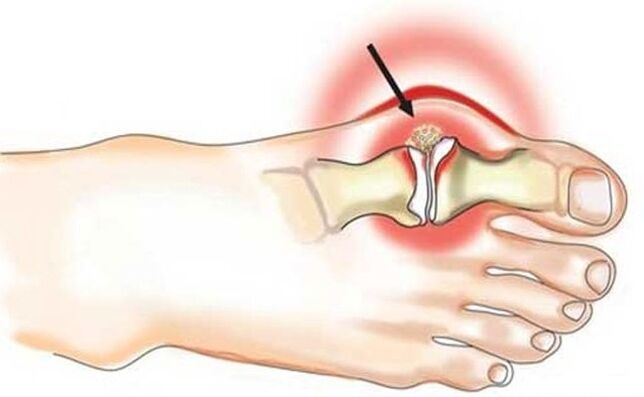
In the vast majority of cases, arthritis begins with inflammation of the joint between the big toe and the foot.With bacterial and reactive arthritis, large joints are usually affected on one side: knee, hip, sacral (at the junction between the spine and pelvic bones).
Gout develops against a background of fever and general weakness, usually preceded by a sore throat.Severe inflammation of bones, cartilage tissue and synovium can occur with fever, general intoxication: headache, weakness, lack of appetite.
The skin over the joint becomes red and feels warmer to the touch than other areas.Externally, it looks raised and increases in volume.If the lesion only occurs on one side, then the difference between the healthy limb and the diseased one is visible.
Limited movement is associated with swelling and pain.If the joint cavity is slightly inflamed, then it works almost fully.With a pronounced pathological reaction, the entire synovial cavity can be filled with fluid - in this case, mobility is severely limited.
Treatment
The treatment is carried out by a general practitioner, rheumatologist or traumatologist - if the cause is mechanical damage.Therapy is aimed at eliminating the provoking factor and stopping inflammation.
For bacterial and reactive arthritis, antibiotics are needed, for autoimmune arthritis - cytostatics or glucocorticoids, for allergic arthritis - glucocorticoids and antihistamines.
The inflammatory fluid is removed with a syringe or special suction during arthroscopy.The joint is immobilized throughout the period of acute inflammation.Afterwards, the patient is shown therapeutic exercises to restore joint mobility.
Doctor's advice
From personal practice and the work experience of colleagues, compresses with gelatin have worked well against inflammation of the joints of any etiology.They are easy to implement and inexpensive.You must fold the gauze in several layers, the length and width must be such that it is enough for the sore joint.Immerse the folded gauze in warm water, squeeze out and straighten.Sprinkle a thin layer of gelatin on top, roll it up so that it ends up inside, like in a bag, and does not spill out.Place it at the joint, wrap it with a plastic bag on top, and secure it with a bandage and/or adhesive plaster.You can wear the compress for up to 3 hours, do it 2 times a day for 2 weeks.Usually the effect is felt on the 4-5th.day of use, but the therapy must be continued to achieve the desired result;if the course is interrupted, the pain will return.
What is osteoarthritis
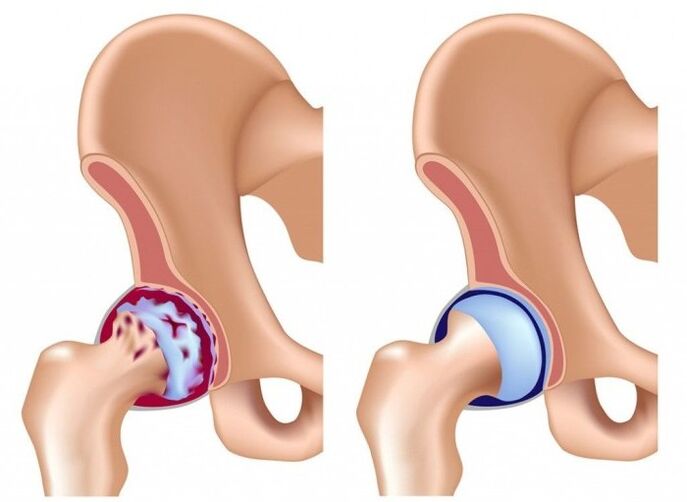
Osteoarthritis (otherwise known as osteoarthritis) is a degenerative disease.It is based on deterioration of the nutrition of articular cartilage, slower recovery and gradual thinning.
Simply put, the cartilage layer is erased faster than it is restored.The bony joint surfaces are exposed.They are not as smooth as cartilage, and when they move, they rub against each other with force.The bone plates are partially destroyed and a mild chronic inflammation develops.
As the disease progresses, bony ridges grow in the joint - a protective response of the tissue to constant damage.They prevent the surfaces from sliding relative to each other, and the mobility of the joint is impaired.
Osteoarthritis in most people begins to develop after 30-40 years, lasts for years, its symptoms are mild or moderate.
Osteoarthritis of the vertebral joints is commonly called osteochondrosis.
Reasons
There are predisposing factors that cause the development of pathology at an early age and complicate its course:
- heavy physical activity in athletes;
- obesity;
- history of joint injury;
- vascular diseases;
- sedentary lifestyle;
- violation of the normal configuration of the joint, for example, with flat feet;
- prolonged exposure to vibration;
- in women - hormonal imbalance or menopause.
Symptoms
Large joints are usually affected on one side: knee, hip, sacral.The disease begins unnoticed.In the beginning, the pain is rare and is associated with significant physical activity.
The discomfort disappears the same day or after a few days if the person manages to rest.As the disease progresses, pain intensity increases and occurs even during normal daily activities.
The mobility of the joint gradually decreases, and as a result of the disease it is completely lost.Movements in the affected limb cause severe pain.Osteoarthritis can worsen depending on the type of arthritis - fluid collects in the joint cavity, the skin above it becomes red and warm.After the inflammatory reaction subsides, the course of the disease returns to its previous course.
Treatment
Treatment of osteoarthritis is carried out by a traumatologist, an orthopedist and sometimes a surgeon.Therapy is aimed at restoring metabolic processes in cartilage, improving joint nutrition and eliminating the inflammatory reaction.The treatment is lifelong, can be continuous or a course of medication.
During the interictal period, chondroprotectors are prescribed in the form of tablets and ointments, therapeutic exercises and massage.In case of exacerbation, chondroprotectors are administered intravenously or intramuscularly along with analgesic and anti-inflammatory drugs.A traumatologist can inject protective medicine directly into the joint every few months.
Advanced stages of the disease require surgical intervention, where the diseased joint is replaced with an artificial one.
Differences between diseases
| Sign | Gout | Osteoarthritis |
| Cause of disease | Inflammation | Degeneration of cartilage tissue |
| Present | Acute, chronic with exacerbations | Chronic |
| Pain | Intense from the beginning, more pronounced in the morning | At the beginning of the disease, it is weak, but gradually increases.Increases in the evening and after exercise |
| Movements | It is necessary to "spread" - in the morning after sleep, the joints are least mobile | Mobility decreases gradually, no morning stiffness |
| Affected joints | The small joints in the hands and feet are affected symmetrically.Large suffer from bacterial infection | One or more large joints on different sides of the body |
| Blood test | Pronounced inflammatory changes in the general blood test, rheumatoid factor, C-reactive protein, antibodies against pathogens | No characteristic changes |
| X-ray | Staged changes, osteoporosis - loss of bone tissue, cysts in the bones | Gradual changes, deformation of the joint space, the appearance of bone ridges and outgrowths. |
| Basic treatment | Anti-inflammatory drugs | Chondroprotectors |
A similar feature of both diseases is a progressive course with a gradual loss of mobility.Autoimmune arthritis often manifests itself at a young age, when a person is still careless with his health.
It should be remembered that any pain in the joints that lasts a long time occurs under certain conditions - this is a serious reason to consult a doctor.It is important to diagnose the disease in time and start its treatment in order to slow down the development of the pathological process.